A 20 Year Investment of Time, Energy, and Effort, Quietly Shaping the Community of Upton
Blog
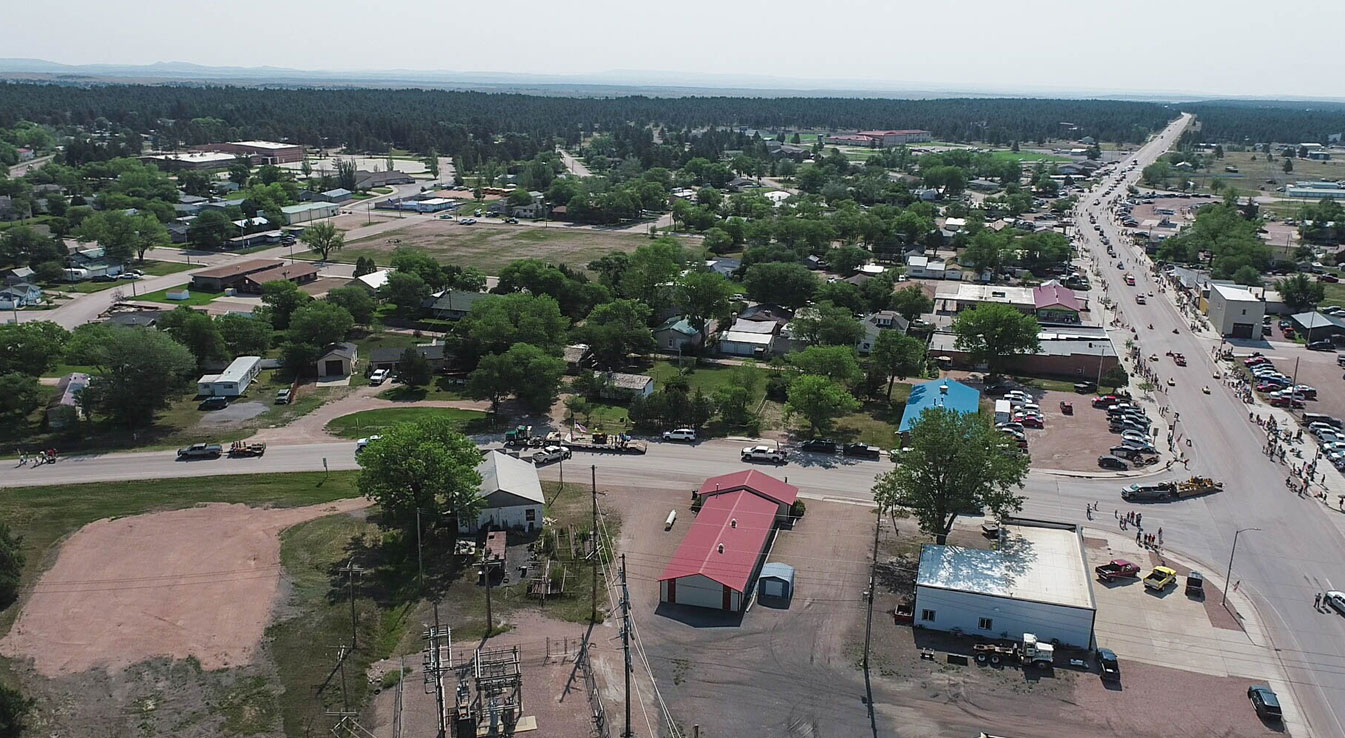
For the past twenty years, Dick Claycomb has been quietly helping shape the community of Upton.
A plaque may recognize his time on the Upton Economic Development Board (UEDB); all of the relationships he’s forged, conversations he’s engaged in, projects he’s put his time and energy into, and businesses he’s supported.
But his tenure represents something even more lasting. An impact that can’t be measured in words, accolades, or even thanks: and that’s a stronger foundation for the next generation.
Turning a Challenge Into a Springboard to Action
The Upton Economic Development Board actually didn’t start off as an Upton-specific group at all.
Back in February 1988, the idea was to scope out economic possibilities for the entire county, and so the Weston County Development Board (WCDB) was incorporated as a 501c3. With headquarters in New Castle, each supporting group provided funding and also, picked a board member to represent their community.
But by the late 90s, a few of the participants had decided to move on. At that point, the remaining directors moved their operations to Upton and the Board was reconstituted with members who operated on a part-time, volunteer basis.
Looming on the horizon was an event that no one anticipated, one that threatened catastrophe for the Upton community. One that would immediately spring the Upton EDB into action.
No Small Feat by Any Means
The 2000s dawned with an economy that was tumultuous at best. American manufacturing had slipped into a recession, oil and gas drilling slumped, and imported steel continued inching its way onto domestic turf.
Not a good scenario by any means, especially for the American Colloid Company’s bentonite plant in Upton, whose product was heavily tied to manufacturing and construction cycles. As industrial factories slowed down, the orders for bentonite dropped.
Feeling the squeeze, the company began reducing its headcount. Incrementally at first, but still, even a few layoffs felt weighty for a plant that employed nearly ten percent of Upton’s entire population.
By 2002, only thirty workers remained. By May of that same year, American Colloid officially closed the plant that had been in operation since 1928.
Buying the plant, demolishing it, cleaning up the ground, and redeveloping the site into an industrial park suddenly became a daunting priority for the UEDB, the town of Upton and the Wyoming Business Council.
No small feat by any means. It took board members a full year just negotiating for the purchase of the site.
But there was another challenge that Claycomb and his fellow board members had to overcome.
The Fine Art of Wooing a Class I Railroad Powerhouse to Upton
When the bentonite plant ended its 70 year run, active rail shipments coming into Upton came to a screeching halt.
Which is a problem when a Class I railroad powerhouse like BNSF puts a high priority on investing in high traffic lines. The idea of building a rail-serviced industrial park on the site of the old bentonite plant was great, but the Fortune 500 powerhouse needed more than blueprints and promises of serviceable tenants.
For years, Claycomb and his fellow board members continued the conversation with the railroad while simultaneously coordinating with state and regional partners to keep the project moving forward.
Eventually, their persistence paid off. The collective was able to secure grant funding to help finance the heavy-duty infrastructure required by BNSF, which finally got the ball rolling.
In 2009, seven long years after the bentonite plant shuttered, the site re-opened as a rail-served industrial park. In 2012, the board sold the redeveloped property to Tiger Transfer LLC, a shipping hub operator that moves bulk goods from railcars onto semi-trucks and vice versa.
That gave BNSF the commercial partner it needed. And the grounds of the old bentonite plant would receive designation as Wyoming’s first BNSF-Certified Site in 2022.
A Legacy to Inspire the Next Generation of Leaders
The industrial park was just what Upton needed to inspire a rebound. As more and more tenants came to occupy the site, the community also reaped the benefits. Its population jumped from 899 in 2007 to over 1,100 in 2010.
New businesses opened. New families moved in. And the industrial park, once the site of 80 job losses, spurred the creation of new jobs and millions of dollars on sales and use tax benefitting Weston County.
Upton Economic Development Board has continued supporting the community in numerous ways, providing funding for things like baseball fields, playground equipment, athletic camps, pre-school scholarships, as well as other nonprofit organizations like the Upton food bank and fire department.
Twenty years of overcoming challenges and creating opportunities where there were none has been the cornerstone of Dick Claycomb’s tenure on the board.
Thank you, Dick, for leaving behind a legacy that will inspire the next generation of leaders to continue positioning Upton as an amazing place to live, work, and innovate.
Contact us with questions or comments about this article.
Photos
More Topics